
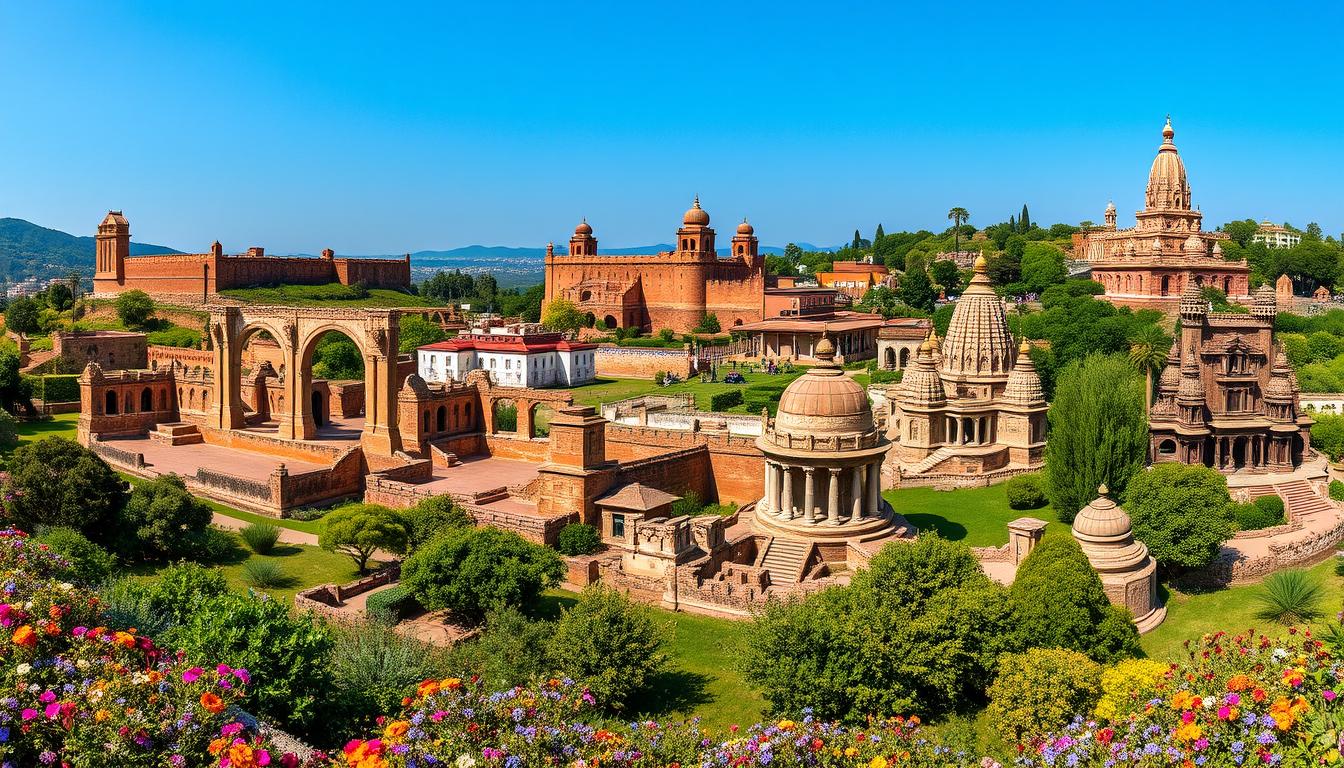
Start an exciting journey through time as we explore the world’s most famous heritage sites. These places, from ancient ruins to grand castles, give us a peek into the past. They let us dive into the rich history of human civilization.
If you love history, culture, or just appreciate the past, this article is for you. It will show you the top heritage sites that will touch your heart and mind.
Find the stories hidden in the old walls of these sites. Every stone and artifact tells a tale of the past. Walk the paths once walked by kings, queens, and common people. Let their stories connect you to today.
See the Pyramids of Giza, the Taj Mahal, Machu Picchu, and Europe’s medieval castles. These sites offer a mix of culture and history that will amaze and teach you. Come with us on this special journey into our shared human history.
Understanding Historical Travel
Traveling to explore the past through cultural tourism and heritage tourism is now more popular. It offers a deeper and educational experience. Unlike regular tourism, it dives into a place’s rich cultural heritage. This lets visitors connect with the stories and traditions that shaped a region.
The rise of educational travel is driven by a need to save historical sites and artifacts. By visiting these iconic heritage sites, travelers help in conservation efforts. They also help spread the word about these cultural treasures. This benefits local communities, boosting pride and strengthening visitor-destination bonds.
“Traveling to historical sites allows us to step back in time and gain a deeper understanding of the events and people who have influenced the world we live in today.”
The heritage tourism industry keeps growing, offering many ways to explore the past. From tours of ancient ruins to interactive museum exhibits, there’s a lot to see. These experiences are vast and engaging for those interested in cultural tourism.
Must-Visit Heritage Sites in the U.S.
Across the United States, many iconic landmarks and historical sites await. They give us a peek into the nation’s rich heritage. From the Statue of Liberty in New York Harbor to the stunning Mount Rushmore in South Dakota, these sites amaze with their beauty and history.
The Statue of Liberty, a gift from France, symbolizes freedom and democracy. It welcomes millions of visitors every year. Nearby, Independence Hall in Philadelphia is where key documents were signed. It’s a key site in the nation’s founding.
Further west, Mount Rushmore in the Black Hills of South Dakota is famous. It shows the faces of four U.S. presidents: George Washington, Thomas Jefferson, Theodore Roosevelt, and Abraham Lincoln. This monument is a tribute to the nation’s history and its leaders’ legacies.
“These historical sites are not just destinations, but windows into the past, allowing us to connect with the stories and sacrifices that have shaped our nation.”
Whether you love history or just want to see America’s landmarks, these sites are a must-see. They offer a deep dive into the United States’ past.
Exploring National Parks and Historical Landmarks
America’s national parks are more than just natural beauty. They also protect the country’s rich history. Places like Mesa Verde and Gettysburg let visitors step into the past. Here, you can follow in the footsteps of those who helped shape our history.
The national parks history is deeply connected to America’s story. These vast landscapes hide historical landmarks that tell of past times. Standing by Mesa Verde’s sandstone cliffs, you learn about the Ancestral Puebloan people’s strength and creativity.
“The national parks are the best idea we ever had. Absolutely American, absolutely democratic, they reflect us at our best rather than our worst.”
Preserving these sites is more than keeping buildings standing. It’s about keeping their stories alive for future generations. From Gettysburg’s battlefields to Mesa Verde’s cliff dwellings, each place offers a unique glimpse into American history.
Exploring national parks reveals layers of history that will amaze and motivate you. These historical landmarks show the American people’s resilience, creativity, and spirit. They invite you to explore the stories that have made this nation so remarkable.
Tips for Planning Your Historical Travel
Creating a memorable historical travel experience begins with careful travel planning. Start by doing deep historical research on your destinations. Learn about the stories that have shaped these places over time. This will deepen your knowledge and help you create an engaging itinerary that makes history come alive.
When choosing where to stay, look for places that mix modern comforts with old-world charm. You might find a century-old inn or a restored historic manor. These places let you feel the history in every corner.
Make sure to spend enough time exploring each historical site. Take your time to soak in the atmosphere and find hidden stories. As Maya Angelou said, “The more you know of your history, the more liberated you are.”

Plan your travel itinerary well to make your trip both enriching and fun. With some preparation and an open mind, your journey will be unforgettable. You’ll gain a new understanding of the world and your role in it.
Benefits of Exploring Historical Sites
Going on educational travel to historical sites opens up a world of benefits. We dive into the past and gain a deeper cultural understanding. This understanding goes beyond time and space.
Visiting famous heritage sites lets us see history up close. We see the triumphs and struggles that have shaped our world. This experience helps us appreciate the many stories that make up our world today.
Exploring historical places also offers great learning chances. By following in our ancestors’ footsteps, we learn about the past’s social, political, and economic forces. This knowledge helps us understand today’s issues better.
“Connecting with the past is not just a matter of intellectual curiosity – it’s a way to deepen our understanding of ourselves and the world around us.”
In the end, traveling through history does more than teach us facts. It’s a journey that enriches our cultural understanding, personal growth, and love for educational travel.
Historical Travel for Families
Traveling through history with your family can be incredibly rewarding. It gives kids and teens a chance to learn and have fun at the same time. There are many ways to make history exciting and unforgettable.
Visiting family-friendly historical sites is a great way to spark your child’s interest in history. Places like the Smithsonian National Museum of American History in Washington, D.C. or the Rock and Roll Hall of Fame in Cleveland, Ohio, offer interactive exhibits. These experiences make history come alive. Educational vacations to places like the Alamo in San Antonio, Texas or the Statue of Liberty in New York can also deepen their appreciation for history.
“Traveling with kids is an opportunity to create lasting memories and instill a love of learning that will stay with them for a lifetime.”
When planning kid-friendly tours, think about what each age group will enjoy. Young kids might like scavenger hunts or costumed shows. Older kids and teens might prefer deeper stories and more freedom to explore. Tailoring the trip to your family’s interests keeps everyone excited and engaged.

The secret to successful family historical travel is finding a balance between learning and fun. By adding interactive elements, multimedia, and hands-on activities, you can make your family’s journey unforgettable and enriching.
The Role of Guided Tours in Historical Travel
Exploring historical sites can be a deeply immersive and transformative experience. Guided tours play a crucial role in unlocking the full potential of these journeys. With the help of expert guides, travelers can delve into the rich tapestry of the past.
Guided tours offer a personalized and engaging approach to historical travel. They allow visitors to gain a deeper understanding of the events, people, and cultural significance that shaped these locations. Expert guides share little-known facts, captivating anecdotes, and expert analyses that elevate the experience.
“A good guide can transport you to another time and place, making the past come alive in a way that’s both educational and entertaining.”
Guided tours provide an immersive experience that allows travelers to fully connect with the past. Whether it’s a walking tour through a colonial-era town or a bus excursion to a remote archaeological site, these historical tours offer a level of depth and engagement that is unmatched by solo exploration.
By partnering with expert guides, visitors can gain a newfound appreciation for the complexities and nuances of history. These immersive experiences not only enlighten but also inspire. They empower travelers to become active participants in the ongoing story of our shared heritage.
Accommodations Near Historical Sites
Planning a historical travel adventure? The right accommodations can make it even better. You can find historic hotels and heritage lodging near famous landmarks. These places offer a real taste of history.
Staying in historic hotels is a great choice for history buffs. These hotels keep their old charm and character. They let you feel like you’ve traveled back in time.
For something special, try heritage lodging. It includes old castles and manor houses turned into unique places to stay. These authentic stays let you see the local history and culture up close.
“Staying in a historic hotel or heritage lodging is like being transported to another era, allowing you to fully immerse yourself in the story of the place.”
Looking for the best historic hotels or heritage lodging? Do your homework. Choose places that keep their original charm. It makes your trip even more memorable.

Traveling Off the Beaten Path
Step away from the usual tourist spots and find a world of hidden historical gems to explore. While famous sites draw many, the real charm of a place often lies in its lesser-known sites and authentic experiences. Start a journey that takes you off the usual path and dive into the rich stories and traditions of local communities.
In the Southwest, the Gila Cliff Dwellings National Monument in New Mexico is a hidden treasure. These ancient pueblos, carved into cliffs, show us the lives of the Ancestral Puebloan people who lived here long ago. By exploring beyond the usual trails, visitors can see the calm beauty and deep history of this hidden historical gem.
“Exploring the lesser-known sites allows you to connect with the past in a more authentic and meaningful way. The crowds disappear, and you’re left with a sense of wonder and discovery.”
The Cahokia Mounds in Illinois, a UNESCO World Heritage Site, also highlights the Mississippian civilization’s rich culture. These large earthen mounds, once a bustling city, are often overlooked but offer a unique and authentic experience for those who venture off the beaten path.
By exploring beyond the usual tourist spots, travelers can find a world of hidden historical gems and lesser-known sites that offer a more authentic and rewarding experience. So, get ready for adventure, and start your journey to discover the untold stories of the past.
Connecting with Local Histories
Exploring the local culture and oral history of a place is a deep way to connect. By joining community engagement efforts, you learn the stories that make a place special.
Look for local storytellers to hear their community’s history. Go to cultural events and festivals to dive into local traditions. Help preserve historical sites and artifacts to see the past through the eyes of locals.
“Connecting with local histories allows you to understand a place on a more profound level, beyond the surface-level tourist experience.”
Learning from locals makes your travel more meaningful. You’ll appreciate the rich stories of people across the United States more.

Photography Tips for Historical Travel
Capturing the essence of historical sites through your camera is rewarding. As a travel photographer, you can preserve these moments and share them. Whether you’re into travel photography, historical documentation, or just stunning images for photo preservation, these tips will help you.
When photographing historical landmarks, composition is key. Look for unique angles and perspectives. Use leading lines, framing, and the rule of thirds to create striking images.
Lighting is crucial for historical photos. Try to capture the site during the golden hour for a warm glow. Use natural shadows and reflections to add depth. Avoid harsh midday light to prevent unflattering shadows and washed-out details.
For equipment, a versatile camera with interchangeable lenses is essential. A wide-angle lens captures grandeur, while a telephoto lens isolates details. Bring a sturdy tripod for steady shots, especially in low light.
“Photography is a way of feeling, of touching, of loving. What you have caught on film is captured forever… it remembers little things, long after you have forgotten everything.”
Be respectful and mindful when photographing historical sites. Avoid disruptive behavior and follow rules. By preserving these moments, you contribute to our shared heritage.
Sustainable Historical Travel Practices
Travelers on historical journeys must adopt sustainable practices. These protect cultural heritage and natural environments. Responsible tourism is key to preserving these sites for the future.
Being mindful of our environmental impact is crucial. Using public transit, walking, or cycling reduces carbon emissions. Choosing sustainable accommodations also supports responsible tourism.
Preserving cultural heritage is equally important. When visiting sites, respect local customs and traditions. Supporting small businesses and learning about the community’s history deepens appreciation. These actions help protect our global heritage.