
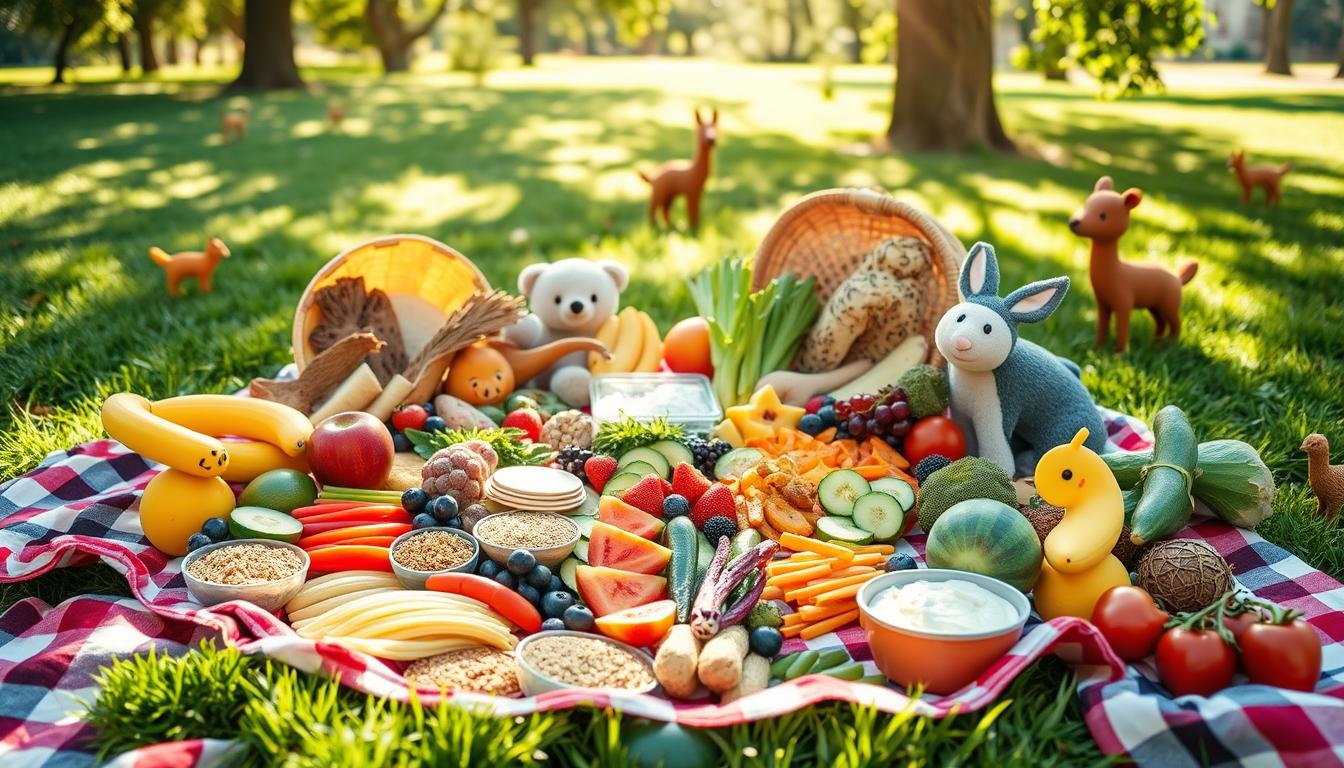
Good nutrition is key for kids’ growth and health. A balanced diet gives them the energy to stay active and healthy. As parents, we must teach our kids the value of eating well early on.
We’ll share tips on healthy eating to help your child grow strong. We’ll cover why nutrition matters and how to make a balanced meal. Our goal is to help your kids enjoy a variety of nutritious foods.
Teaching kids to eat well can be challenging. But with patience and creativity, we can make it fun. This way, they’ll learn to love healthy foods that will benefit them for life.
Importance of Nutrition for Growing Children
Proper child development is greatly influenced by the quality of a child’s diet. Nutrient-dense foods are key for physical growth, brain development, and a strong immune system. Healthy eating habits early in life lead to better health and well-being later on.
Growing children need more nutrients to support their fast growth. Nutrient-rich foods like fruits, veggies, whole grains, and lean proteins are vital. They give kids the vitamins, minerals, and proteins needed for strong bodies and minds.
“Proper nutrition during childhood is not only essential for physical development but also lays the foundation for lifelong healthy habits.”
A balanced diet also boosts a child’s brain power, including memory and problem-solving skills. A strong immune system, built on a nutritious diet, keeps kids healthy and well.
By focusing on proper nutrition, parents can ensure a healthy future for their kids. Teaching kids to eat well early on helps them make smart food choices and develop a positive view of food.
Building a Balanced Plate
Creating a balanced plate is key for healthy eating in kids. The USDA’s MyPlate guidelines offer a simple way to build nutritious meals. It divides the plate into five main groups: fruits, vegetables, grains, protein, and dairy.
To make a MyPlate-inspired meal, fill half the plate with colorful fruits and veggies. Use a quarter for whole grains and another quarter for lean protein. Add a serving of dairy, like milk or yogurt, to complete it. Portion sizes for kids depend on their age, but these guidelines help ensure they get the nutrients they need.

Variety is crucial when building a balanced plate for kids. Encourage them to try new fruits, veggies, and whole grains. This helps them develop healthy eating habits for life.
“The best way to get kids to eat more fruits and veggies is to serve them with dips or sauces they enjoy. A little bit of ranch or hummus can make a world of difference.” – Registered Dietitian, Sarah Smith
By following MyPlate guidelines and adjusting portions for growing kids, families can ensure they get the nourishment they need. Building a balanced plate is a simple yet effective way to promote healthy eating and set kids up for success.
Fun Ways to Encourage Healthy Eating
Teaching kids to eat healthy can be fun and challenging. Parents can make meals exciting with a little creativity. Food art lets kids use their imagination to create colorful dishes.
Cooking with kids is also a great idea. It teaches them important skills and makes them proud of their food. They can help make everything from veggie smoothies to garden salads.
Growing veggies at home can spark kids’ interest in healthy eating. Letting them help with planting and harvesting makes them appreciate their food more. Seeing a seed grow into a plant can encourage them to try new foods.
“When kids are involved in the process of growing, preparing, and even serving their own healthy meals, they are much more likely to be excited about trying new foods and embracing a balanced diet.”
Using these fun strategies, parents can make healthy eating a family adventure. Kids will learn, explore, and love nutritious foods for life.
Essential Nutrients for Kids
Good nutrition is key for kids to grow strong and healthy. They need vitamins for children, minerals, and protein sources. These help their immune system, bones, and overall health.
Vitamins A, C, and D are super important for kids. Vitamin A helps with eyes, skin, and fighting off sickness. Vitamin C boosts their immune system, and vitamin D keeps bones and teeth strong. Foods like citrus fruits, leafy greens, and fortified dairy are great sources.
Minerals like calcium, iron, and zinc are also key. Calcium is for strong bones, iron carries oxygen, and zinc fights off infections. Dairy, lean meats, and whole grains are full of these minerals.
Lastly, protein sources like lean meats, eggs, beans, and nuts are essential. They help build and fix muscles. Eating a variety of these foods ensures kids get all the amino acids they need.
“Proper nutrition lays the foundation for a child’s physical and cognitive development.”
By ensuring kids get the right mix of vitamins, minerals, and proteins, parents help their health. This sets them up for a lifetime of wellness.

Hydration: The Overlooked Nutrient
Proper nutrition is key for growing kids, but hydration is often forgotten. Water intake for kids is crucial for their health and growth. Parents should make sure kids drink enough water.
The right amount of water intake for kids depends on age, activity, and weather. Kids should drink 6-8 cups of fluids daily. They can have water, milk, or sugar-free beverages. Making water fun, like adding fruit, can help.
“Proper hydration is essential for children’s physical and cognitive function. Adequate water intake for kids supports healthy organ function, regulates body temperature, and aids in nutrient absorption.”
Parents can try different healthy drinks to please their kids. Homemade smoothies, 100% fruit juices, or sparkling water with fruit are good options. Making hydration fun helps kids drink enough.
Keeping kids hydrated is simple but often missed. By focusing on water intake for kids and offering various healthy drinks, parents help their kids grow well. This sets them up for a lifetime of good health.
Tips for Picky Eaters
Dealing with picky eating can be tough for parents. But, with the right steps, you can help your child try new foods. Start by introducing new foods slowly, even if they don’t want to eat them at first. Offer small bites and let them touch, smell, and explore without feeling forced.
Some kids don’t like certain textures. Try different ways of preparing food, like steaming or pureeing, to find what they like. Also, praising your child for trying new foods can really help. It shows them it’s okay to try new things.
“It’s important to remember that picky eating is a normal phase of development for many children. With patience, creativity, and a focus on making mealtimes enjoyable, you can help your child become a more adventurous eater.”
Every child is different, so try different things to see what works for your family. By slowly introducing new foods, addressing texture issues, and praising them for trying, you can help your child become more open to new foods.

Healthy Snacks for Kids
It can be tough to keep kids full between meals. But, with a bit of creativity, you can make nutritious snack ideas they’ll love. Try making after-school snacks or simple homemade treats. These healthy options are sure to win over even the most finicky eaters.
Fruit skewers are a hit with kids. Mix juicy berries, crisp apple slices, and sweet grapes on a wooden stick. It’s a fun, portable snack full of vitamins and fiber. For something savory, make veggie chips. Slice zucchini, carrots, or sweet potatoes thin, toss in olive oil, and bake until crispy.
“Healthy snacking is not only about satisfying hunger, but also about providing essential nutrients to support growing bodies and minds.”
If your kids enjoy dips, try pairing them with crunchy veggies. Use homemade hummus or guacamole with bell peppers, cucumber, and celery. These dips offer healthy fats and protein, keeping them full longer. For a sweet treat, make frozen yogurt bites with Greek yogurt, honey, and their favorite fruit.
The secret to great healthy snacks for kids is to make them fun and tasty. With a little planning and creativity, you can keep your kids happy and healthy between meals.
Meal Planning for Families
Getting ready for family meals can feel overwhelming. But, with smart planning, you can make it easier and save money. Start by embracing family meal prep. Plan your meals for the week ahead, using affordable ingredients and quick methods.
Try batch cooking big batches of proteins, grains, and veggies on the weekend. Then, use them in different meals all week. This cuts down your kitchen time and keeps your meals varied and affordable.
Also, make a grocery list before you shop. Stick to what you need and avoid buying things on impulse. This helps you save money and reduces food waste. Plus, add plant-based proteins like beans and lentils to your meals. They’re good for you and your wallet.
“Meal planning takes a bit of effort upfront, but it pays off in the long run with time-saving and budget-friendly meals for the whole family.”
By using these easy tips, your family can enjoy tasty, nutritious meals without the stress of last-minute decisions or spending too much. Focus on your family’s health with a bit of meal prep magic.

Addressing Common Nutritional Challenges
Children often face nutritional challenges as they grow. Food allergies and intolerances can make it hard to eat well. Special diets may be needed for certain health issues. Finding the right way to feed them can be tough, but it’s doable.
Managing nutritional deficiencies is a big challenge. Kids on special diets might miss out on important vitamins and minerals. This could lead to health problems. It’s key to work with a healthcare pro to spot any gaps and create a meal plan that fits their needs.
“A well-balanced diet with a variety of whole foods is the best way to ensure your child gets all the essential nutrients they need.”
Finding safe food options for kids with allergies or intolerances can be hard. Looking into special diets or getting advice from a dietitian can help. This way, parents can make meals that are both tasty and safe for their kids.
By tackling these nutritional challenges, parents can help their kids grow strong and develop good eating habits. These habits will benefit them for years to come.
Educating Kids About Nutrition
Teaching kids about nutrition education is key for their health and happiness. By learning about healthy food choices and food label reading, they can make smart food decisions.
Interactive activities are great for teaching nutrition. Young kids can play games sorting foods or making a balanced plate. Older kids can learn about macronutrients, portion sizes, and vitamins.
“The greatest wealth is health.”
– Virgil
Make nutrition a part of your family’s life by going to the grocery store together. Teach kids to read food labels to find good foods and avoid bad ones.
For successful nutrition education, keep it fun and right for their age. By teaching them to love healthy food early, you help them make good choices for life.
Leading by Example as Parents
As parents, our actions greatly affect our children’s eating habits and health. By living a healthy lifestyle, we can encourage our kids to love healthy food. This helps them appreciate nutritious choices for life.
Family meals are key in shaping a child’s eating habits. Regular meals together strengthen bonds and introduce kids to many healthy foods. Parents can show kids how to enjoy meals and eat mindfully.
Parents can also set a good example by being active. Whether it’s walking, trying new workouts, or playing with the kids, it shows the value of staying fit. By focusing on health, parents teach their kids to value wellness for life.