
Owning a home can be challenging, but it’s not impossible. With the right tools and a bit of knowledge, you can solve common problems quickly. This article will show you how to do simple DIY repairs that save time and money.
Are you dealing with a leaky faucet, a slow drain, or drafty windows? We’ve got solutions for you. Our easy-to-follow instructions and tips will make you a DIY expert. So, get ready to fix your home problems with confidence.
This guide covers everything from DIY basics to electrical issues and appliance maintenance. It’s perfect for both seasoned DIYers and beginners. You’ll learn how to tackle many household problems, saving you time, money, and stress.
Let’s start fixing common household problems in minutes. Together, we’ll make your home a comfortable and well-maintained place.
Understanding the Basics of DIY Repairs
Starting DIY home repairs can save you money and make your home better. But, it’s key to know the basic tools, safety steps, and repair basics first. This part will help you feel ready to fix common problems at home.
Let’s talk about the essential tools you need. A good toolbox has a screwdriver set, pliers, a hammer, a tape measure, and a level. These tools help with many tasks, like fixing hinges or putting up shelves.
It’s also vital to focus on safety precautions when doing DIY work. Wear gloves and safety glasses, work in well-ventilated areas, and be careful with electricity or dangerous stuff. This way, you avoid injuries and do a good job.
Knowing the repair fundamentals is also crucial. Learn how to take things apart and put them back together, solve problems, and follow instructions. With this knowledge, you can handle many repairs confidently.
“The key to successful DIY repairs is preparation and a willingness to learn. By arming yourself with the right tools, safety measures, and repair knowledge, you’ll be well on your way to becoming a self-sufficient homeowner.”
Fixing Leaky Faucets
Leaky faucets waste a lot of water and increase your utility bills. Luckily, fixing them is easy and quick. You can save money and stop the dripping by learning to replace faucet washers and cartridges.
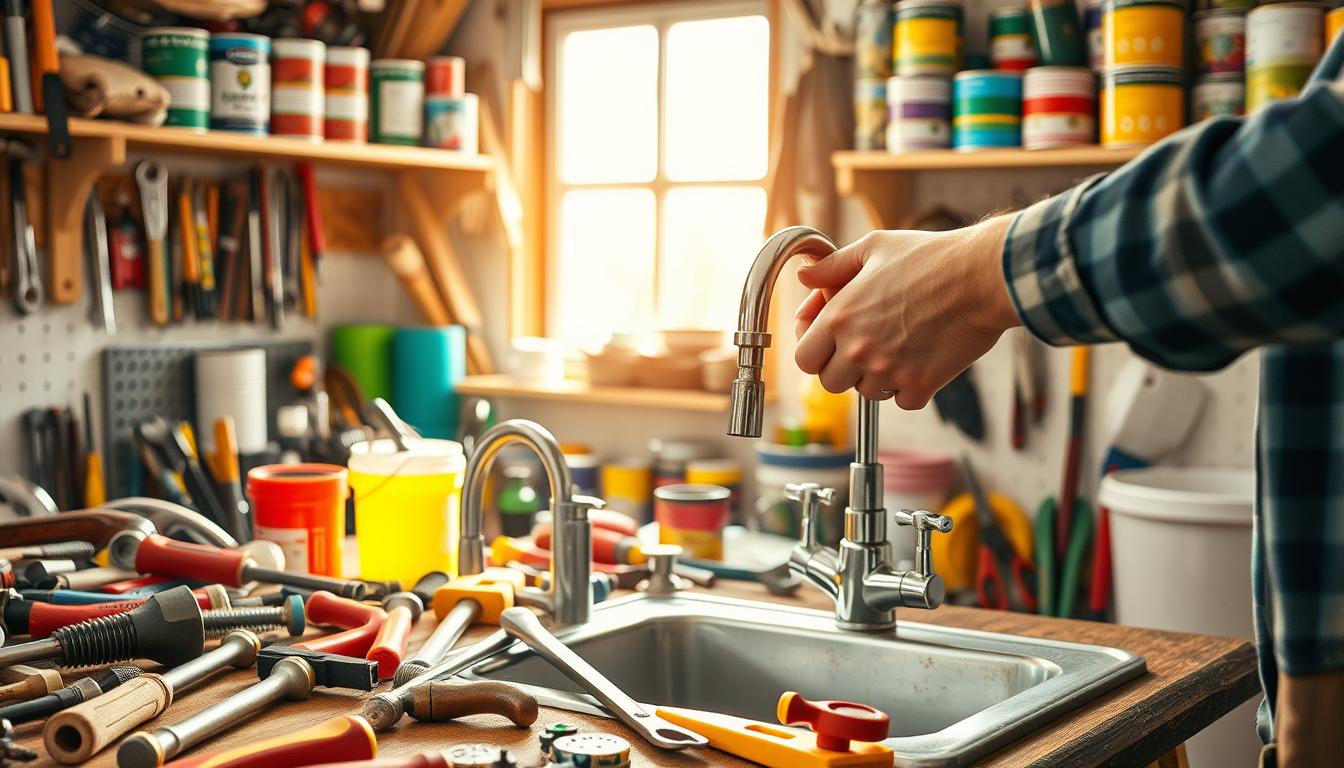
To fix a leaky faucet, first find where the problem is. You might need to take apart the faucet to see the faucet washer or cartridge. Then, you can fix the leak with the right plumbing repairs.
“Fixing a leaky faucet can be a simple and satisfying DIY project that saves you money and helps conserve water.”
Often, a worn-out faucet washer is the cause of the leak. It’s cheap and easy to replace. For more complex faucets, you might need to swap out the whole cartridge.
After fixing the faucet, make sure it’s put back together right. This ensures it doesn’t leak again and helps save water. With a bit of patience and the right skills, you can fix common plumbing issues like a pro.

Dealing with Slow Drains
Slow drains can be really frustrating. But, there are good ways to fix them without using harsh chemicals. Using a plunger is one of the easiest methods. It creates suction and pressure to push out the clog.
For harder clogs, a drain snake or auger is very helpful. It lets you reach deeper and remove the blockage.
If you like natural solutions, try baking soda and vinegar. Pour a cup of baking soda down the drain, then a cup of vinegar. Let it fizz for a few minutes, then rinse with hot water. This combo breaks down organic matter and clears the drain.

To prevent clogs, use a drain cover or hair catcher. Also, pour boiling water down the drain sometimes. This helps dissolve and flush away buildup. With these unclogging techniques, you can keep your drains flowing well without harsh drain cleaning products.
“A clogged drain can be a real hassle, but with the right tools and a little elbow grease, you can get things flowing again in no time.”
Repairing a Running Toilet
Dealing with a running toilet can be frustrating. But, it’s often a simple fix. The main culprits are the toilet flapper and the fill valve. With some toilet maintenance, you can find and fix the problem. This saves water and money.
First, check the flapper. This is the rubber seal that lets water flow from the tank to the bowl. If it’s worn or not sealing right, it can cause the toilet to run nonstop. Replacing the flapper is easy and cheap, often fixing the issue.

Another common problem is the fill valve. It controls the water level in the tank. If it’s not adjusted right, the tank keeps refilling. This leads to a running toilet. Adjusting the fill valve is simple but makes a big difference.
“Fixing a running toilet can save you hundreds of gallons of water and reduce your utility bills significantly.”
Understanding basic toilet maintenance helps you fix a running toilet quickly. This saves water and money over time.
Patch Up Wall Damage
Keeping your home looking good means fixing wall damages. These can be small holes from pictures or dents from doorknobs. Learn how to fix drywall and touch up paint to make your walls look new again.
First, check how bad the damage is. Small cracks or nail holes can be fixed with spackle and sanding. For bigger holes, cut a square around it, put in new drywall, and smooth out the edges with joint compound.
“The key to a successful drywall repair is blending the new surface with the old. Take your time, and don’t be afraid to apply multiple coats of spackle or paint to achieve a seamless finish.”
After fixing the drywall, focus on painting. Try to match the paint color as closely as you can. Use a small brush to paint the fixed area, blending the edges well. For the best look, apply thin coats instead of one thick one.

With patience and care, you can make wall damages almost invisible. Remember, the secret to great drywall repair and paint touch-ups is taking your time. Make sure your spackle application is perfect for a flawless finish.
Addressing Drafty Windows and Doors
Drafty windows and doors can make your home lose a lot of energy. This forces your heating and cooling systems to work harder. It also increases your utility bills.
There are easy DIY fixes to make your home more energy-efficient and cozy. One way is to use weatherstripping around your windows and doors. It helps keep cold air out and warm air in.
Caulking is also great for sealing gaps and cracks. It helps stop drafts and boosts your home’s energy efficiency.
“Sealing drafts can save homeowners up to 30% on their energy bills,” says energy efficiency expert, Sarah Johnson.
Replacing old or damaged weather seals on doors and windows is another good idea. These small changes can greatly improve your home’s comfort and lower your energy costs.
Fixing drafty windows and doors can make your home more energy-efficient. It also makes your living space more comfortable. Take the time to check your home and use these DIY fixes for a better future.
Fixing Squeaky Floors
Squeaky floors can be annoying, but they’re usually easy to fix. The first step is to find out where the squeak is coming from. Then, you can use a simple fix like tightening loose boards or using a lubricant. These DIY methods can make your wood floors quiet and comfortable again.
Often, squeaky floors are caused by carpet tack strips that have worn out. These strips keep the carpet in place but can become loose over time. To fix this, you need to remove the carpet and tighten or replace the strips.
Loose floorboards are another common reason for squeaks. Wood expands and contracts with temperature and humidity changes, causing boards to detach. Finding the squeak’s source and securing the board with screws usually fixes it.
For tough squeaks, try using a lubricant like paraffin wax or silicone polish. These can reduce friction between the boards and quiet down the floor. Make sure to clean the area well before applying.
By finding and fixing the source of squeaks, you can make your home quieter and more comfortable. With a few easy floor repair steps, you can bring peace back to your living spaces.
Don’t Forget Electrical Problems
Electrical safety is key in home maintenance but often ignored. Faulty outlets, tripped circuit breakers, or wiring issues are serious risks. Fixing these problems keeps your family safe and comfortable.
Malfunctioning outlets are common. Replacing an outlet is a simple DIY task with basic tools and knowledge. But, always be careful to avoid shocks and other dangers.
Tripped circuit breakers are another issue. Resetting might solve it, but finding the cause is crucial. If it keeps tripping, it might need a pro electrician for troubleshooting.
“Addressing electrical problems promptly and correctly is not only a matter of convenience, but also a matter of safety. Ignoring these issues can put your family at risk and lead to more extensive and costly repairs down the line.”
Some electrical repairs are doable by homeowners. But, know when to call a pro for complex issues. Calling a licensed electrician ensures your home’s electrical system is safe and efficient.
Maintaining Home Appliances
Keeping your household appliances in good shape is key to saving money and energy. This section shares tips on how to care for your refrigerators, dishwashers, washing machines, and more. By following these steps, you can make your appliances last longer and work better.
Start by reading the user manual for each appliance. Cleaning parts like coils, filters, and seals regularly helps them run smoothly. For refrigerators, make sure to clean the condenser coils. They can get dusty, which lowers energy efficiency.
For dishwashers, don’t overload them and use the right cycle and detergent. Washing machines also need the right load size and water level. Cleaning the lint trap in your dryer is important for energy efficiency and safety.