
In today’s fast-changing world, emergencies can happen anytime. From natural disasters to global pandemics, being ready is key. This article will show you how to stay strong and prepared for any crisis.
You’ll learn why emergency prep is crucial and how to make a solid plan. We’ll cover what to include in an emergency kit and how tech helps in crises. Plus, we’ll talk about community resources that can help you out.
Whether you’re new to prepping or already a pro, this guide has something for you. It’s packed with tips and tools to help you face any situation with confidence. Join us on this journey to master disaster readiness and survival tips.
Understanding the Importance of Emergency Preparedness
Disaster planning and risk assessment are key to emergency preparedness. Being ready for unexpected events can greatly improve your safety and the well-being of your loved ones. A good emergency plan helps you face any situation, from natural disasters to personal emergencies.
Emergency preparedness helps lessen the effects of disasters. By knowing the risks and planning ahead, you can keep your life less disrupted. This not only keeps you safe but also strengthens your community’s resilience.
“Preparedness is not about being afraid, it’s about being _ready_.”
Moreover, emergency preparedness offers long-term benefits. A solid plan helps you bounce back faster, easing the emotional and financial burdens of unexpected events. By preparing, you can quickly start rebuilding and moving forward, rather than getting stuck in the aftermath.
The value of emergency preparedness is immense. By focusing on disaster planning and risk assessment, you protect your future and help your community. This proactive step is essential for keeping your family safe, no matter what challenges come your way.
Types of Emergencies You Should Prepare For
Emergency preparedness is key. It’s important to know about different emergencies. This includes natural disasters like hurricanes and earthquakes, and man-made emergencies like power outages. Health crises, like pandemics, also need careful planning.
Natural disasters can happen suddenly. Hurricanes bring strong winds and flooding. Earthquakes can damage buildings and cause loss of life. To prepare, secure your home, have an evacuation plan, and stock up on supplies.
Man-made emergencies come from various sources. Power outages can last a long time, needing alternative light and heat. Civil unrest, like riots, can also threaten safety.
Health crises, like the COVID-19 pandemic, affect many. They can overwhelm healthcare and change our daily lives. To prepare, keep clean, have medical supplies, and stay updated on health news.

Knowing about different emergencies helps us prepare better. Stay informed, practice drills, and have an emergency kit ready. These steps help us stay safe in any crisis.
Creating a Comprehensive Emergency Plan
Uncertainty can be scary, but a good emergency plan helps a lot. A family emergency plan gives structure and guidance when disaster hits. It includes an evacuation strategy with clear routes and meeting points to get everyone to safety fast.
Communication protocols are also key. They help keep families connected during emergencies. By having a backup contact outside your area, you can stay in touch even when local lines are down. Regular drills and plan updates make sure everyone knows their part and is ready to act fast.
“Preparation is the key to weathering any storm. An emergency plan gives your family the confidence and resilience to face challenges head-on.”
Creating a detailed emergency plan might seem hard, but it’s worth it. It helps you identify dangers and work with community resources. Each step makes your plan stronger, protecting your loved ones in emergencies.
By focusing on emergency planning, you can control the unpredictable. Your family will be ready for any storm with clear evacuation plans, reliable ways to communicate, and a shared understanding of roles. You’ll face tough times together, strong and united.
Building Your Emergency Kit
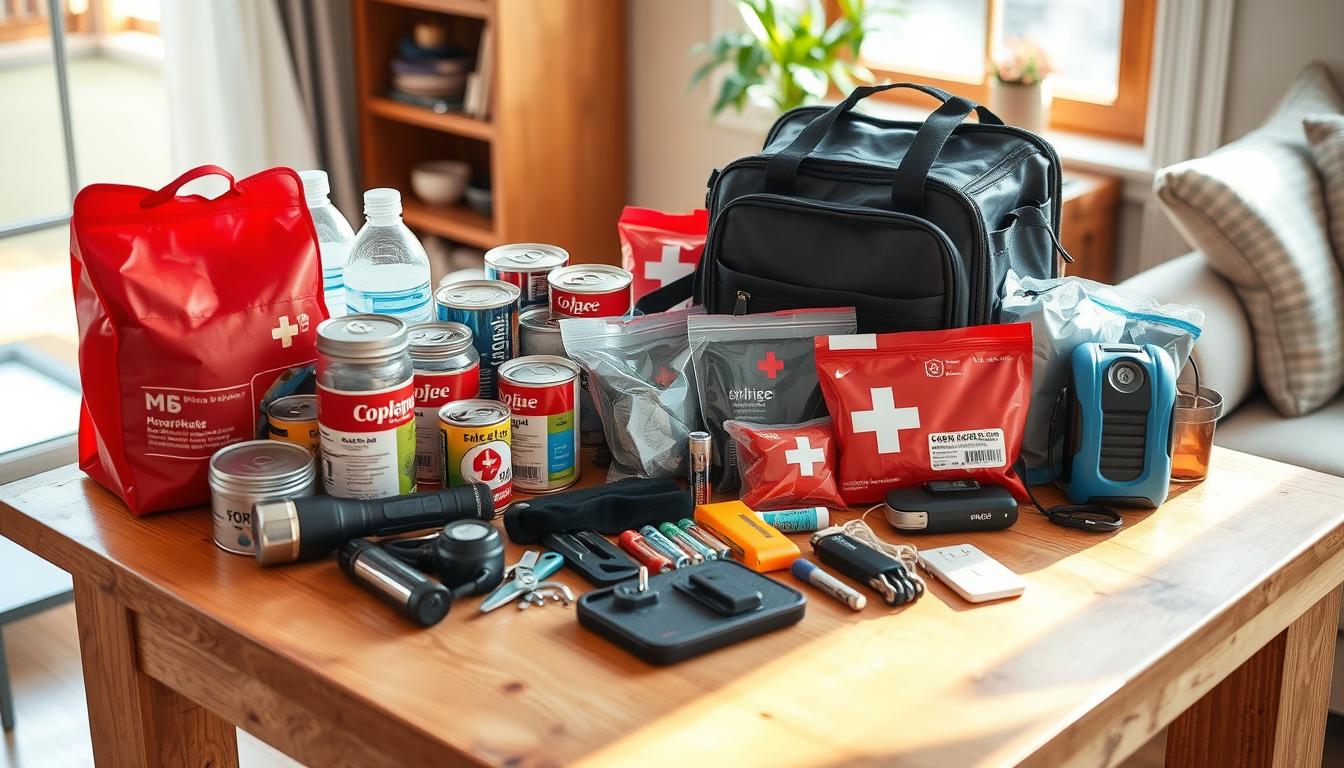
Preparing for emergencies is key, and a crucial step is making a survival kit. This kit, also called a “go-bag,” should have all the essentials for you and your family. It includes food, water, first aid, and tools to help you through tough times.
Begin with the basics for your survival kit. Get non-perishable food like canned goods, energy bars, and dried fruits. Also, have a lot of clean drinking water. Include a manual can opener, utensils, and a flashlight with extra batteries. First aid items like bandages, antibiotic ointment, and pain relievers are also vital.
“Being prepared is half the victory, so build your emergency kit today and rest easy knowing you’re ready for anything.”
Other important items for your go-bag are a multi-tool or pocket knife, duct tape, a portable radio, and a change of clothes. Personal hygiene items like toilet paper, soap, and any needed medications are also important. With these emergency supplies, you’ll be ready for any unexpected event.

Your emergency kit should fit your specific needs and the risks in your area. Check and update it regularly to keep everything in good condition. With a well-prepared survival kit, you’ll be ready for any challenge.
Staying Informed During a Crisis
When emergencies happen, it’s key to stay informed. From severe weather to civil unrest, timely updates are crucial. Using various emergency alerts and devices helps keep you safe.
Emergency alert systems send vital notifications to your phone or other devices. They warn about natural disasters and give updates. Make sure to sign up and keep your info current.
It’s also vital to find reliable sources of information. Look to trusted news, government sites, and community groups. Avoid social media, where rumors can spread fast.
“Knowledge is power, and in times of crisis, having the right information can mean the difference between safety and danger.”
Communication tools like two-way radios and satellite phones are also important. They help you stay in touch with family and access emergency services.
By staying informed and using the right tools, you can face any crisis with confidence. This ensures your family and community’s safety. Being prepared is the best way to deal with the unknown.
Training and Drills: Practice Makes Perfect
Getting ready for emergencies is more than just having supplies and plans. It’s also about improving our survival skills through practice. Emergency drills and family preparedness exercises are key to being ready to act fast when disaster hits.
Learning survival skills is vital. This includes first aid and basic self-defense. Regular practice helps us remember these skills and feel more confident in a crisis.
“The more you sweat in peace, the less you bleed in war.” – Norman Schwarzkopf
It’s also important to do emergency drills with your family. These should cover different scenarios, like natural disasters and active shooter situations. Practicing your plan helps you be ready to use it when needed.

Remember, practice makes perfect in emergency readiness. By spending time on training and drills, your family will be ready for any challenge.
First Aid Skills Everyone Should Learn
In a crisis, knowing basic first aid can be a lifesaver. These skills are key for immediate care and saving lives. Whether it’s a disaster, accident, or medical emergency, being ready with basic first aid knowledge is crucial. It’s the first step in effective emergency medical response.
CPR (Cardiopulmonary Resuscitation) is a vital first aid skill. Learning chest compressions and rescue breaths can revive someone who’s stopped breathing or having a heart attack. Also, knowing how to treat wounds, stop bleeding, and handle common injuries is essential. It helps until professional help arrives.
“The greatest fear in the world is the opinion of others. And the moment you are unafraid of the crowd, you are no longer a sheep, but a lion. A great roar.”
― Coco Chanel
Learning basic first aid is a must for everyone. It can mean the difference between life and death in a crisis. By learning these skills, you become a valuable asset to your community. You’ll be ready to respond effectively in any emergency.
Financial Preparedness for Emergencies
Being financially ready is key to emergency planning. When unexpected events happen, a strong financial base helps a lot. A big part of this is having an emergency fund.
An emergency fund is a special savings for unexpected costs. It’s good to have enough to cover three to six months of living expenses. This way, you can avoid debt or using your regular savings when emergencies come up.
It’s also important to check your insurance coverage. Make sure you have enough insurance, like homeowner’s or renter’s insurance, to protect your stuff in disasters. Also, think about getting special insurance, like for floods or earthquakes, if you live in a risky area.
“Preparing for the unexpected is not just about stocking up on supplies; it’s also about safeguarding your financial well-being.”
Lastly, keep your important documents safe and organized. Store copies of key financial papers, like bank statements and insurance, in a safe place. A fireproof and waterproof container or a safe deposit box is best. This way, you can easily get to these important documents in an emergency.
By focusing on financial readiness, you can feel less stressed and more ready for emergencies. Remember, being financially prepared is a big part of good emergency planning. It helps you and your family face any challenges that come your way.
Community Resources and Support
When emergencies happen, knowing local emergency services and support groups is key. These groups help in many ways, from immediate response to long-term recovery. They are crucial in times of crisis.
Local emergency services like fire departments and police are the first to act in emergencies. They are trained to handle many situations quickly and well. Building a good relationship with them before a crisis can help a lot.
Community organizations, such as nonprofits and faith groups, also play a big role. They know the community well and offer specific help. This can include food, shelter, mental health support, and disaster recovery services.
Mutual aid networks are groups that help each other in times of need. They are great for building community strength and helping the most vulnerable. By joining these networks, you can find resources, share info, and face challenges together.
“In times of crisis, community support can make all the difference. Knowing where to turn and how to access the resources you need can be a game-changer.”
Getting to know local emergency services, community groups, and mutual aid networks is important. It ensures you and your family have support when emergencies occur.
Preparing Your Home for Emergencies
When disasters strike, having an emergency-ready home is key. You can secure furniture, add safety features, and make structural changes. These steps help your family stay safe.
Start by securing big furniture and appliances. Items like bookcases and TVs can be dangerous during earthquakes or storms. Use brackets or straps to keep them from falling. Also, install safety latches on cabinets to prevent spills.

Next, add disaster-resistant features to your home. This includes impact-resistant windows, strong roofing, and a backup power generator. These upgrades boost your home’s safety and value, giving you peace of mind.
“Preparing your home for emergencies is not just about protecting your property – it’s about safeguarding your loved ones and creating a refuge in times of crisis.”
Emergency-proofing your home is crucial for your family’s safety. By being proactive, you make your home more resilient. It’s ready to face any disaster that comes your way.
The Role of Technology in Emergency Preparedness
In today’s world, technology is key in getting ready for emergencies. It includes apps that send updates and smart home devices that make homes safer. These digital tools help people and communities get ready for any crisis.
Staying informed is crucial in emergency preparedness. Emergency apps lead the way here. They give users important info like evacuation routes and emergency contacts. They also send alerts for weather warnings and other dangers. With these apps, people can stay connected and informed, even in chaotic times.
“Technology has changed how we prepare for emergencies. Digital tools have given people the power to ensure their safety and resilience.”
Smart home devices also boost home safety and security in emergencies. Smart smoke detectors, water sensors, and emergency lights can alert people to dangers and take action automatically. They also work with home automation systems, letting users control their homes from afar.
There are many digital tools for preparedness beyond apps and smart home devices. They help people store important documents, make emergency plans, and stay in touch with family in crises. These tools offer a vital safety net, making sure important info and resources are available when needed.
As technology’s role in emergency prep grows, it’s clear these tools are becoming more important. They help individuals and communities stay ready and strong against any challenge.
Long-Term Preparedness Strategies
Preparing for emergencies is a continuous effort. It’s important to take a long-term view to build lasting resilience. By becoming more self-sufficient and strengthening community bonds, you can keep your family safe from future dangers.
Adopting sustainable preparedness is a big step forward. This means using eco-friendly methods like growing your own food and saving water. It also means using energy from the sun and wind. These actions not only help the planet but also make you less reliant on others when disaster strikes.
Building a strong community is also key. By getting to know your neighbors and joining local emergency groups, you can create a network of support. When people work together, they can share resources and help each other out. This makes everyone more resilient and better able to face emergencies.